|
We've launched a new site! Visit our updated version here
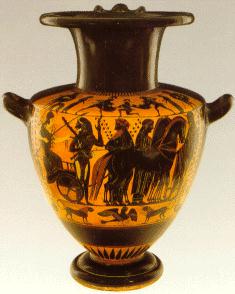
O V E R V I E WAncient Greek Vases The traditional terms Geometric, Archaic, Classical and Hellenistic are used as names for historical periods and stages in the development in Greek art. Geometric refers to the period from about 900 to 700 BCE when Greek art began to be revitalized after the stagnation of the 'dark ages' that followed the destruction of the Mycenaean world. The art of this period, mostly painted vases and small bronzes, is characterized by the use of geometric forms of decoration (as opposed to free forms). Stylized human figures in narrative scenes appear on vases by about 750 BCE, but scenes from myth do not occur before the end of the century. Trade with the East developed during the late 8th century and the influence of eastern forms and styles is clear in Greek art of the 7th century - the term 'orientalizing' is often used to describe the new developments through which geometric forms give way to more natural ones and fantastic figures and shapes proliferate. The 6th century was a time of consolidation and prosperity in Greece, and the term Archaic is used to describe the art of this period. This was, without any question, the most creative period for the depiction of myths in art, and many of the conventions established then carried on into later times. The sack of the Acropolis in Athens by the Persians in 480 BCE and the subsequent destruction of the Persian fleet by the Athenians traditionally marks the end of the Archaic period and the beginning of the Classical, when Greek art reached its full and powerful maturity. The term Hellenistic, then, is used to describe the history and art of the Greek world from the death of Alexander in 323 BCE on into the 1st century BCE. The great social and political changes during the Hellenistic period are paralleled by great changes in the way myths were understood and depicted. Vases Shapes Pythus are vases used for conservation of grains, amphoras for conservation and transport of olive oil or wine. Pelices are used with oil, craters with wine, and hydrias with water. OEnochoes are vases to put water or wine inside cantharus, calyx are cups for drinking, and rhytons are vases with the shape of a horn or an animal head. Lecythus are funerary vases. 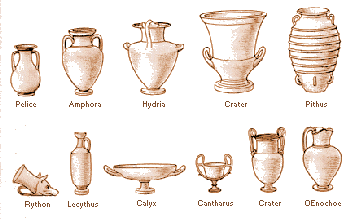 Links: Copyright ©1998-1999 Roy George |